
OpenAI rolls out AI tools to 200+ Indian NGOs to boost scale and efficiency
AI is also being used to simplify complex government documents by translating them from formal Hindi, Marathi or English into everyday language.


ADVERTISEMENT
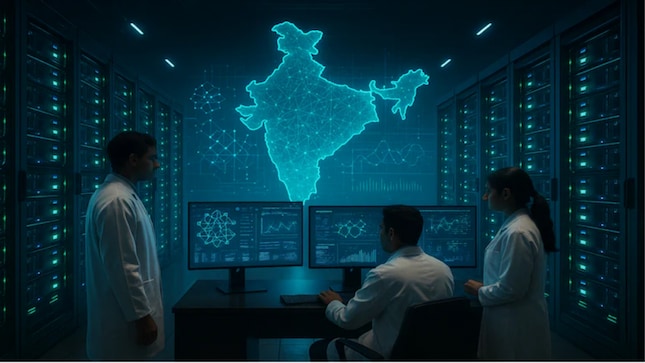
OpenAI has concluded a four-city Nonprofit Jam across Bengaluru, Mumbai, Kolkata and New Delhi to accelerate the adoption of artificial intelligence within India’s social sector. More than 200 nonprofit organisations took part in the workshops, which focused on demonstrating how AI can help social enterprises scale impact, streamline operations and improve service delivery to communities.
As reported by CNBC-TV18, Pragya Misra, head of strategy and government affairs at OpenAI India, said nonprofits are at the forefront of AI adoption, despite operating with limited resources. She stated that many organisations are already experimenting with AI to deliver services to thousands and, in some cases, lakhs of beneficiaries, adding that the initiative aimed to remove friction and democratise access to AI tools.
The Nonprofit Jam was organised in partnership with Karya and Wadhwani AI and brought together social enterprises to explore real-world applications of AI, ranging from improving internal efficiencies to addressing large-scale community challenges.
One of the key examples highlighted was Haqdarshak, a social enterprise co-founded by Aniket Doegar, which has spent over a decade working to improve public access to government welfare schemes. India has nearly 20,000 government programmes that frequently change due to budgets, elections and policy updates, creating challenges for both citizens and NGOs.
Doegar said that between 2016 and 2020, it took the organisation 4.5 years to build a database of 7,000 schemes across 14 languages, while AI now enables updates across all local languages within 24 to 48 hours. He added that any changes in eligibility criteria or documentation requirements can be instantly reflected and shared with field agents.
AI is also being used to simplify complex government documents by translating them from formal Hindi, Marathi or English into everyday language, helping farm workers, gig workers and construction labourers better understand and access the benefits they are entitled to without confusion or delays.
While AI adoption is gathering momentum, experts stressed the importance of local context and cultural nuance. Aditya Nayan, associate director of partnerships at Wadhwani AI, told CNBC-TV18 that while large language models such as ChatGPT are powerful, contextualisation is essential for meaningful real-world impact. He said fine-tuning models with local data helps build trust and ensures outputs are relevant and usable for diverse communities.
Misra said the nonprofit sector in India is uniquely positioned to lead in AI adoption, noting that despite budget constraints, organisations are innovating rapidly and using AI to multiply their impact from thousands to potentially millions of beneficiaries.
Doegar added that significant work remains, stating that a large portion of India’s population has yet to effectively use AI. He said social enterprises must invest further in research and development to ensure AI reaches those who need it most.